The Tea-Coloured Trap: Reading a Rossendale Puddle Before You Plunge
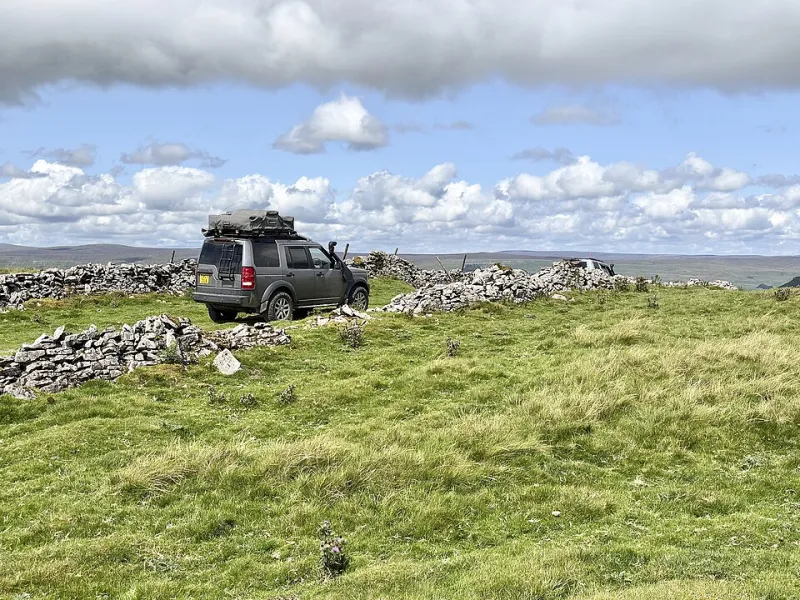
Photo: Trevor Littlewood , CC BY-SA 2.0, via Wikimedia Commons
Rossendale lanes have a knack for making water look innocent. A long, tea-coloured puddle across a moorland track can look like a bit of seasonal fun — the sort of thing that makes a good photo and a better story. But the puddle is rarely the whole story. Underneath that flat brown surface there might be a rut deep enough to swallow a wheel, a peat shelf that looks firm until it isn't, or a soft edge that turns a tidy line into a recovery job. The best water crossing is usually the one you walk first.
A splash is not a plan
There is nothing wrong with enjoying a bit of water on a lane day. The problem starts when the splash becomes the plan. A convoy rolls up, someone says it looks fine, the first vehicle goes through, and everyone else follows because the leader made it. That is not evidence. It is luck with a audience.
Rossendale's lanes sit in a landscape of peat, gritstone, old drainage and farm traffic. Water collects in the hollows, and the bottom of a puddle can change after a week of rain or a single afternoon of tyre churn. The surface tells you almost nothing about what is underneath. Treat every crossing as a fresh question, even if you drove it last month.
Read the edges first
The edge of a puddle is where most of the useful information lives. Look at the entry lip. Is it firm gravel, packed stone, or a smear of soft mud? If the edge is already chewed up, the water beyond it is probably worse. Look at the exit too. A clear, firm exit is worth more than a heroic entry. If the far bank is steep, greasy, or rutted, you are not crossing a puddle — you are climbing out of one.
Check the width of the water against the width of the track. A puddle that spans the full lane gives you no dry line and no easy escape. A puddle with a firm strip along one edge might be passable, but only if that strip is genuinely firm and not just a different shade of bog. Watch for peat-stained water, too. That dark brown colour often means the water is sitting on deep peat, and peat has a talent for holding softness under a hard-looking surface.
Probe like you mean it
A walking stick, a long branch, or a boot on the end of your leg is a better depth gauge than optimism. If it is safe to walk the crossing, walk it. Probe the entry, the middle and the exit. Push down, not just in. You are looking for firmness as much as depth. A shallow puddle over soft peat can be worse than a deeper one over stone.
Be honest about what the probe tells you. If the stick disappears past the point where you would be happy to wade, stop. If the bottom feels mushy, stop. If you cannot find a firm exit, stop. This is not a lack of commitment. It is the whole point of scouting. A green lane is not a challenge to be conquered; it is a shared track that needs to stay usable for the next driver, the farmer and the walker.
The entry, the exit, and the bog between
When you do decide to cross, pick a line that keeps your wheels on the firmest ground you can find. Enter slowly and keep a steady throttle. Do not charge it. A bow wave can look impressive, but it can also push water into places you would rather keep dry, and it gives you less time to feel the ground changing under the tyres.
Keep your eyes on the exit. If the vehicle starts to sink or the steering goes vague, stop and reassess. Do not spin the wheels to find out what happens next. That is how a small crossing becomes a deep rut and a long recovery. If you are in a convoy, send one vehicle at a time and keep the rest back. Give the driver room to reverse if needed. Nobody needs an audience pressed against the rear bumper.
Know your reverse
Reversing out of a water crossing is not a defeat. It is a sensible use of the space behind you. Before you enter, know what reverse looks like. Is there room to back up? Is the ground behind you firm? Is the vehicle behind you far enough back? If the answer to any of those is no, you have already made the decision easier: do not commit.
A dignified retreat beats a muddy recovery every time. The lane will still be there next week. The puddle will still be there too, probably deeper. Your pride might take a small knock, but your vehicle, your mates and the track will thank you for it.
The five-minute routine
Before you plunge, give yourself five minutes. Stop the vehicle. Get out. Look at the entry, the exit and the edges. Probe the depth and the firmness. Check for peat-stained water and soft banks. Decide on a line and a reverse plan. If anything feels wrong, walk away or back away.
It is not the most exciting part of a lane day, but it is the part that keeps the day going. Rossendale's water crossings can be good fun when they are read properly. The tea-coloured trap only wins when you treat it like a puddle and forget it might be something else.