The Gauge Is a Recovery Tool: Fuel Sense for Rossendale Lane Days

Photo by Photo by Baron on Unsplash on Unsplash
The gauge is not a decorative dial
There is a school of thought that says half a tank is plenty for a lane day. It usually comes from someone who has never spent forty minutes winching a mate out of a bog while the light on the dashboard quietly turned from amber to a personal threat. In the Rossendale Valley, lanes can feel wonderfully remote even when you are only a few miles from Rawtenstall or Bacup. That is part of the appeal. It is also exactly why the fuel gauge belongs on your kit list, not just your dashboard.
Starting a lane day below half a tank is not adventurous. It is false economy. You are not saving fuel by delaying the fill-up; you are borrowing risk and paying it back with interest somewhere muddy and inconvenient.
Where the fuel actually goes when you are barely moving
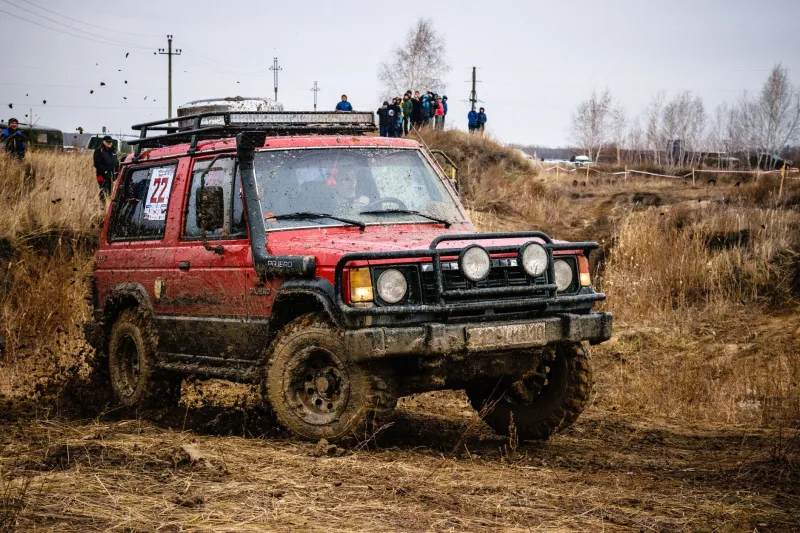
A 4x4 on a green lane is not doing the same job as a 4x4 on the A56. Low-range crawling, repeated hill starts, wheelspin, cold engine oil, soft tyres and a bit of extra weight all add up. Add mud, a steep climb or a long section where you are feathering the throttle to avoid tearing up the surface, and the fuel computer starts telling stories you would rather not hear.
You do not need to be doing 70 mph to burn fuel. You need to be doing work. And lane work is work: the engine is often cold, the gearbox is busy, and the driver is making constant small corrections. If your road average is decent, do not assume the lane average will be close. It will not. On a messy winter day, a thirsty modified 4x4 can easily use double what the owner expects. That is not a reason to stay home. It is a reason to fill up properly before you leave.
Gate stops, idling and the just-leave-it-running trap
Rossendale's lanes are shared spaces. There are gates, walkers, horse riders, farmers, dog walkers and the occasional person who wants to ask whether your truck is for sale. You will stop. You will stop more than you think. Some of those stops are quick; some involve a chat, a map check or a discussion about whether the next section is actually a legal byway or just a hopeful-looking gap in a hedge.
Idling during those stops is tempting, especially in winter when the heater is doing good work. But leaving the engine running for every gate and every natter is poor form and pointless fuel use. Switch off when it is safe and sensible. Modern engines cope with it. You will hear the occasional old-school objection about starter motors, but a lane day is not a cold-start endurance test. Common sense applies: leave it running in traffic or where stopping is unsafe, shut it down when you are parked up and the bonnet is not needed for anything urgent.
A dozen short stops will not empty your tank on their own. But they do add to the day's total, and they are a reminder that lane fuel maths is not simply miles divided by mpg. It is time, idling, load, surface and weather.
Building a reserve that fits the valley
A sensible rule for a Rossendale lane day is simple: treat half a tank as the point where you start thinking about fuel, not the point where you start the day. If you are heading out from Manchester, Burnley, Bolton or wherever else, fill up before you get into the lanes. Rawtenstall, Haslingden, Bacup and Whitworth all give you sensible options, but do not assume every little lane junction has a handy forecourt. It does not.
Aim to finish the day with at least a quarter tank, and give yourself more margin if the weather is grim, the route is new or the convoy is large. A quarter tank in a standard 4x4 might sound like plenty, but on mud, in low range, with a detour because a gate is locked, it shrinks fast. If the lanes are running slow and the light comes on, you want that to be an inconvenience, not an emergency.
It also helps to think in time, not just miles. A full tank might give you a comfortable day out and a relaxed drive home. Half a tank might give you a tense afternoon watching the gauge instead of the ruts. That is not the point of green laning.
Spare fuel: legal basics and practical kit
Carrying spare fuel is not a free pass to run low. It is a backup. If you choose to carry petrol, use a proper approved container, keep it upright and secure, and never fill it inside the vehicle. Petrol vapour is the real risk, so check current gov.uk guidance and speak to your insurer before you start strapping cans to the roof. Carry only what you actually need, and remember that a container rattling around in the boot is not a fuel strategy; it is a hazard with a handle.
Diesel is less volatile but still needs respect: secure it, label it, keep it out of the cabin and do not overfill. Whatever you carry, know how you will use it safely and where it will live on the vehicle. A five-litre can is useful for a mower or a mate's empty tank. It is not an excuse to leave the valley on a quarter tank and hope for the best.
A simple pre-lane fuel routine
Before you leave, fill up or at least get well above half. Check your planned route for fuel stops, not just cake stops. Make sure your spare can is clean, sealed and secure if you are carrying one. In a convoy, agree who has spare fuel and who does not, so nobody assumes the person behind has a magic jerry can. After the day, refill before you park up at home if you can. It saves the next morning's faff and keeps the truck ready for the next spur-of-the-moment lane run.
The half-tank habit feels frugal. In practice, it is a way of turning a good day out into a fuel maths exercise. Fill up, plan a reserve, and spend your attention on the lane, the gate and the mates around you. That is where it belongs.