One Seat Filled: A Rossendale Reality Check on Laning Solo
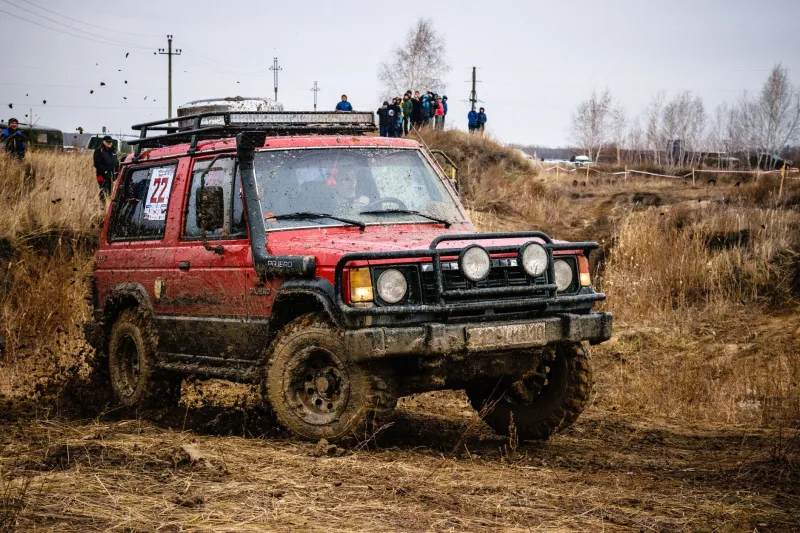
There is a particular sort of morning in the Rossendale Valley that makes solo laning feel like the most sensible idea in the world. The cloud is sitting low over Musbury, the Grane Road is quiet, and the lane you have been eyeing up on the map is only ten minutes from a brew. No convoy to marshal, no waiting at gates, no debate about whose turn it is to lead. Just one vehicle, one driver, and a track that asks you to pay attention.
That version of solo laning is genuinely good. It is also the version that gets posted online, which is why it is worth talking honestly about the other version — the one where a simple mistake takes three times as long to sort because there is nobody else to hand you a shovel.
Why the empty passenger seat appeals
Solo laning strips a day back to the basics. You pick the pace. You stop when you want to look at the view over Cowpe Lowe or check a gate that looks older than the lane itself. You are not managing anyone else's nerves, tyre pressures or lunch stops. For anyone who spends the working week coordinating people, that is a real holiday.
It is also a better classroom than a big group. When you are on your own, you have to read the ground properly rather than following the vehicle in front. You learn what a Rutland-style rut looks like when it is full of brown water, how a peat edge behaves after a wet week, and where a seemingly firm grassy line will quietly give up beneath a tyre. That education is worth having.
The catch is that the same quietness that makes solo laning lovely also removes your margin for error. A group can absorb a bad call. A solo driver has to live with it.
The bit nobody puts in the caption
Most solo lane days pass without incident, and that is exactly why it is easy to get complacent. The realistic risks are rarely dramatic. They are a battery that has picked today to fade, a tyre bead that lets go in a awkward spot, a twisted ankle while closing a gate, or a phone signal that disappears exactly where the clough narrows and the trees close in.
None of those are disasters in a group. Alone, each one becomes a slow, cold problem. The lane itself is usually not the danger. The danger is the small failure that turns a two-hour morning into a four-hour recovery with darkness coming in.
Kit that earns its place when there is nobody to pass it to you
Solo kit is less about looking prepared and more about removing the need to improvise. Start with the boring things: a spare wheel you have actually checked, a jack that works on your vehicle, a wheel brace that fits, a jump pack, and a tyre inflator that can get you from lane pressure back to road pressure without begging for air at a garage in Waterfoot.
Then add the recovery basics — a proper recovery rope and rated shackles, a shovel with a decent handle, and a pair of waffle boards if your lanes regularly feature soft ground. Know how to use all of it before you need it. A rope you have never rigged is just expensive luggage.
Carry water, food, a warm layer, a headtorch, a power bank and a paper map. A charged phone in a waterproof case is fine until it is not, and the valleys around Whitworth and Edenfield have plenty of pockets where signal simply vanishes. If you lane alone regularly, a personal locator beacon is not overkill. It is the one piece of kit that works when nothing else does.
A check-in routine that is not just theatre
Telling someone you are out laning is not a plan. Telling them which lanes, which direction, where you are parking, and when you expect to be back is a plan. Give a hard deadline for the first check-in and a second deadline for when they should start ringing around.
Keep it simple. A text at the start of the first lane and another at the end of the last one is enough for most days. If signal is patchy, send a message before you drop into the trees and another when you pop out. Avoid the vague all-day message. It feels reassuring and tells nobody anything useful.
Weather and ground: draw your own line
Solo laning works best when you set your thresholds before you leave the house, not when you are halfway up a lane trying to talk yourself into carrying on. A sensible personal rule might be no solo runs on peat after two days of heavy rain, no solo attempts on snow or ice, and no solo night-laning on lanes you do not already know. Add a wind clause if your route crosses exposed moorland edges, because a gusty day on open ground is not the place to be learning how your vehicle behaves.
The best solo drivers turn around early. A lane will still be there next weekend. A boggy section that looks marginal from the driver's seat is exactly the sort of thing to leave for a day when there is a second vehicle behind you.
When a text to a mate is the smarter move
There are clear moments when solo stops being a choice and starts being a gamble. A lane you have never driven before. Unknown water. Deep ruts with no obvious bypass. Any hint that a winch might be needed, because solo winching is a skill and a risk in equal measure. Short winter afternoons when the light is already thinking about leaving. And the classic one: the tempting extra lane at 3pm in December when you are tired, hungry and telling yourself it will only take twenty minutes.
That is the point to send the message. Not because solo laning is wrong, but because judgement is the one thing that degrades quietly when you are cold and keen to get home.
The verdict
Solo laning in the Rossendale Valley is a legitimate pleasure and a useful skill. It sharpens your reading of the ground and gives you a day on your own terms. But it should be earned with kit, a proper check-in and the honesty to call it when conditions or your own energy levels are not right.
Go alone sometimes. Go with mates other times. The lanes do not care either way, but your day will be better if you have thought about which one you are actually doing.