Less Lift, More Lane: The Case for a Modest Rossendale 4x4
Photo: PattayaPatrol, CC BY-SA 4.0, via Wikimedia Commons
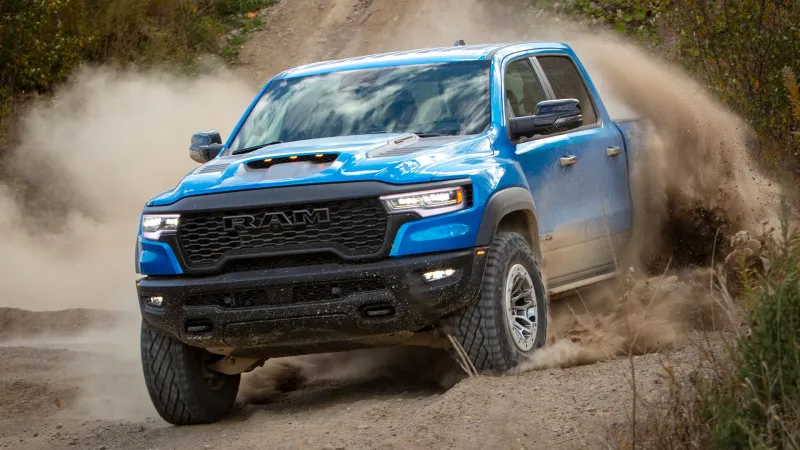
There is a moment, usually in a muddy car park near Rawtenstall, when someone rolls in on 35s and a lift kit that could double as a fire tower. Everyone looks. It sounds brilliant. It looks unstoppable. And then the convoy heads up a narrow, walled lane with overhanging branches, and the big truck spends the next mile breathing in.
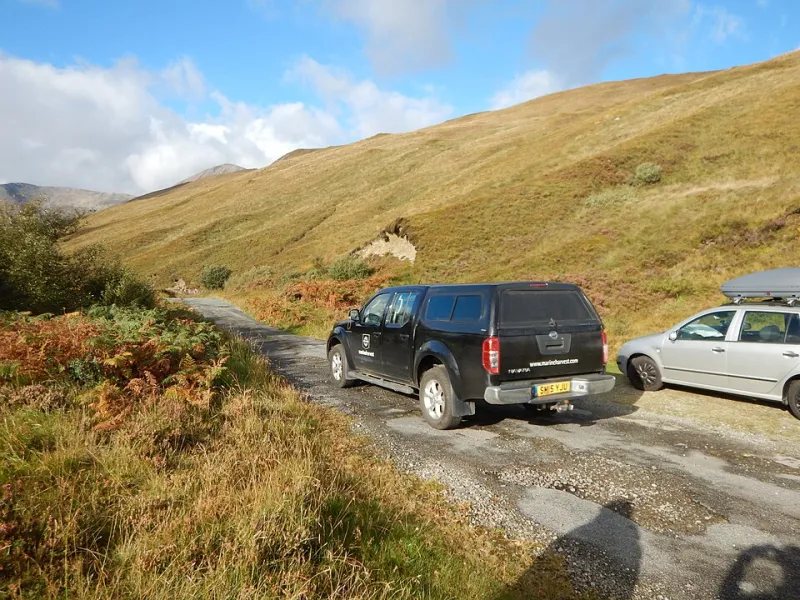
That is not a dig at modified motors. Rossendale Valley 4x4 loves a proper build as much as anyone. But there is a quiet case to be made for the modest 4x4: the one on sensible all-terrains, a small lift if any, decent recovery points and a driver who has spent the money on maintenance instead of armour. For most green-laning in the Valley, that truck will go further, cost less and make fewer enemies.
The lane does not ask for a monster truck
Rossendale's lanes are old. They are narrow, hemmed by dry stone walls, pinched by gateways and shaded by trees that have been there longer than any of us. They are not competition courses. They reward a vehicle that fits, turns and can be placed accurately between ruts.
A tall, wide build makes all of that harder. You end up watching the roof instead of the line. You shuffle past gateposts with millimetres to spare. You take a wider arc around a tight bend because the truck simply will not do anything else. On off-camber sections, extra height raises the centre of gravity and makes the whole thing feel more tippy than it needs to. Mud clearance matters, but so does not tipping over in it.
The best lane vehicle is often the one you can see out of, squeeze through and reverse when a horse rider appears around the corner. That is not a compromise. It is good manners and good sense.
Where the money actually goes
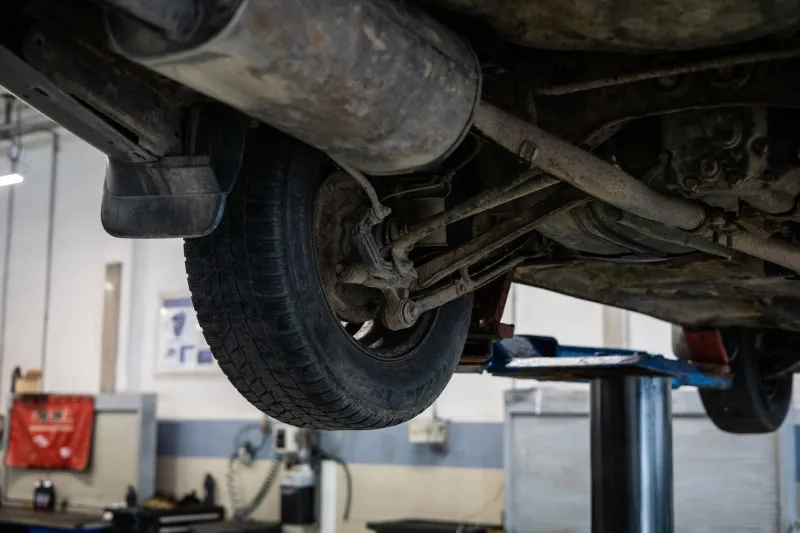
A big build is rarely just a big build. Once you fit the tyres, you start thinking about gearing, brakes, steering joints, wheel bearings, arch clearance and insurance. The list grows. Then you find yourself avoiding the rough stuff because you do not want to break something expensive on a Tuesday night lane run.
A modest build flips that around. You put your budget into quality tyres, fresh suspension bushes, a proper service, recovery points that are actually rated and fitted correctly, and a decent compressor. You keep the geometry sane. You keep the brakes working as the manufacturer intended. And you keep the vehicle reliable enough to drive to work on Monday.
Insurance is part of this too. Declare your modifications, always. A small, sensible list is easier to explain than a towering catalogue of suspension and body changes. It also keeps you honest with your insurer, which matters far more than looking hard in a lay-by.
Mud clearance is not only about height
This is where the big-tyre argument gets interesting. Ground clearance helps, no question. But mud clearance is also about tyre tread, tyre pressure, momentum, line choice and traction. A standard-ish 4x4 on a good all-terrain, with the right pressures and a driver who understands where the ruts are, will often walk through a section that leaves a heavy, lifted truck spinning.
Tall tyres can also hurt gearing and put more strain on standard components. Wide tyres can float less and cut more. Aggressive tyres can tear up soft ground that would have recovered fine. None of this is absolute, but it is worth remembering when you are tempted by the biggest thing in the catalogue.
The Valley's peat, clay and stone tracks change character with the weather. A truck that is light, balanced and predictable is a pleasure in those conditions. A truck that is top-heavy and over-tyred can turn a simple bog into a winch fest.
Manners on shared tracks
There is another reason to keep things modest: other people use these lanes. Walkers, horse riders, cyclists and farmers all share the same narrow corridors. A quieter, narrower vehicle is easier to pass, easier to reverse and less likely to churn up the edges.
Big builds are not automatically bad for access, but they do attract attention. A convoy of towering trucks can look intimidating even when everyone is behaving. A group of well-driven, sensibly modified 4x4s tends to leave a better impression. That matters in a year when every lane, gate and byway is being watched closely.
If you want to keep Rossendale's lanes open, think about the footprint you leave. Literally. A modest truck on the right tyres, driven with care, leaves less of one.
A sensible recipe for the Valley
If you are building for Rossendale green lanes and daily driving, start with tyres. A good all-terrain in a sensible size is the single biggest upgrade. Then look at protection: a decent sump guard, sensible recovery points and a way to air down and back up. A small lift, maybe 25 to 40mm, can help without ruining the ride or the geometry. After that, spend on maintenance and driver training before you spend on more height.
Ask yourself what problem you are solving. If the answer is ground clearance on a specific lane, measure it. If the answer is looking brilliant outside the pub, that is fine too, but be honest about it. There is no shame in a truck that is mostly for show. There is just no point pretending it is the only way to lane.
The daily-drive test
Finally, remember that most of us drive these things to work, to the shops and to the school gate. A modest 4x4 is easier to park, easier to insure, cheaper to run and less stressful on the motorway. It fits in a multi-storey. It does not scrub tyres on full lock. It does not need a step ladder to reach the roof rack.
Rossendale's lanes are brilliant because they are varied, technical and close to home. You do not need a monster truck to enjoy them. You need a vehicle that is fit for the job, a driver who is paying attention and a bit of respect for the people and places around you. Less lift, more lane. That is a build philosophy worth trying.