Five Questions and a Torch: Buying Your First 4x4 in the Rossendale Valley
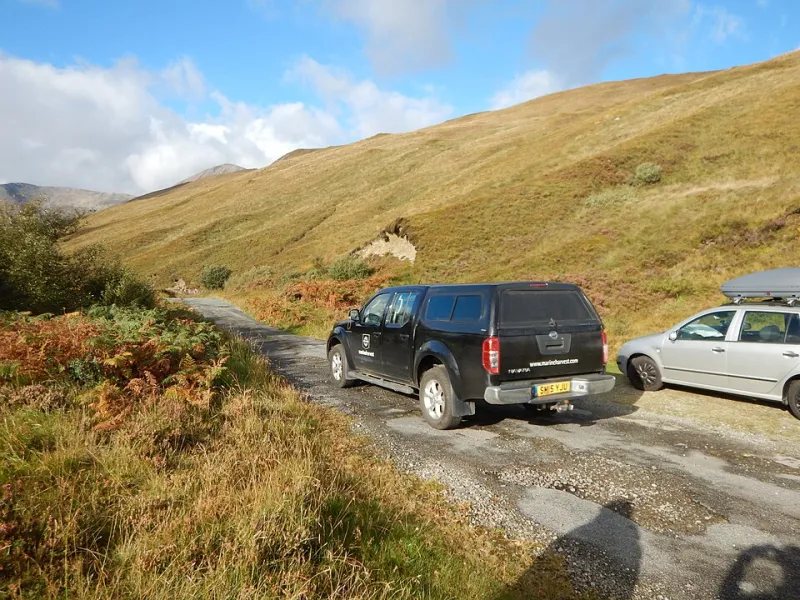
Photo: James Emmans , CC BY-SA 2.0, via Wikimedia Commons
There's a particular kind of November rain in Rossendale. It comes sideways off the moors, it finds the back of your neck, and it makes every used 4x4 on a Bacup side street look convincingly rugged. The seller will tell you she's never let him down. He'll mean it, too. That doesn't make it true.
Buying your first proper off-roader around here isn't really about horsepower or how aggressive the tyres look. It's about whether the thing will still be worth fixing in three winters' time, whether your insurer will still be speaking to you after the first claim, and whether it fits down the lanes you actually want to drive. Get those right and the rest is detail.
Here are the five questions I'd want answered — properly, with the seller standing next to you and the kettle on — before any money moves.
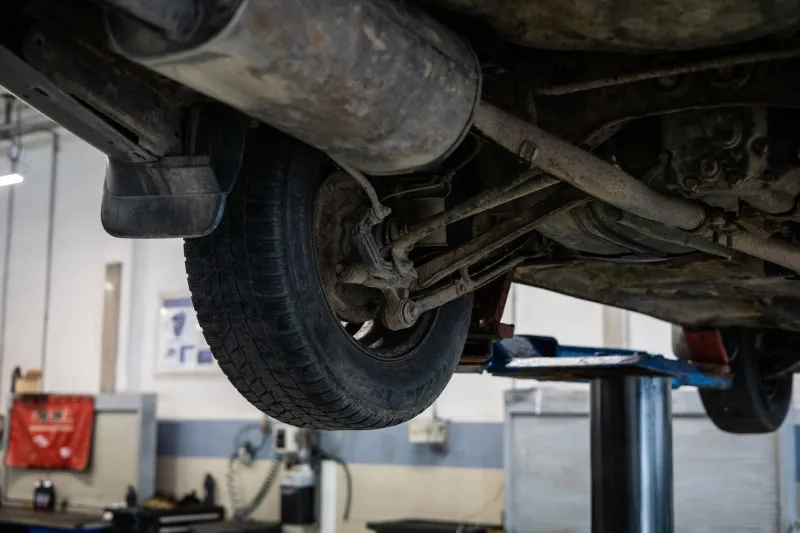
1. What does it look like underneath, and can we get it on a ramp?
This is the whole ballgame. Everything else is haggling.
Rossendale is hard on steel. Salt goes down on the A681 and the A56 from November, the lanes hold water until April, and peat keeps a damp film on anything that sits still. A vehicle that lived its life here or in similar hill country will have been wet more often than it's been dry.
Get underneath. Not a quick kneel-and-peer — actually underneath, on a ramp or over a pit if the seller will allow it, and on cardboard in the wet if he won't. Look at the sills, inner wings, rear crossmember, boot floor, chassis rails, body mounts, and the tops of the shock towers. Brake and fuel lines along the chassis are a classic rot spot and a scary one. So is anything hiding behind plastic sill covers, which are superb at trapping mud and appalling at letting it dry.
Take a torch and a small magnet. The magnet tells you whether that smooth black panel is steel or filler and underseal. Fresh underseal is not proof of care — sometimes it's proof of concealment. Look for overspray on bushes and brake pipes, and for a suspiciously clean patch surrounded by honest grime.
A screwdriver, used gently, will tell you more than an hour of chat. If it goes in with a crunch, walk away and don't feel bad about it.
2. Who did the modifications, and are they on the insurance?
Nearly every 4x4 you look at round here will have been touched. A lift, bigger tyres, wheel spacers, a snorkel, rock sliders, a light bar, a remap, a stainless exhaust, arches trimmed to fit 33s. None of that is automatically bad. Undeclared and badly executed is bad.
Ask for receipts and ask who did the work. A well-known specialist with paperwork is worth far more than a driveway job with a grinder and good intentions. Check the tyres actually match the wheels and the arches — tread should sit under the bodywork, not outside it — and check the spare matches too, because a mismatched spare is a miserable way to discover a problem at the side of a lane.
Then ask the question that saves people real money: has everything been declared to the insurer? Modifications that change the vehicle from factory spec can affect cover, and an undeclared lift or set of oversized tyres is exactly the sort of thing that surfaces at the worst possible moment. If the seller gets shifty here, that's your answer.
While you're at it, ask how it drives at 60 on the Grane Road. A badly lifted truck will wander, tramline and feel vague. A properly set-up one won't.
3. What will it actually cost to run, week to week?
Be honest with yourself about this before you fall in love with a paint job.
Fuel is the obvious one. Twenty-five miles to the gallon is a good day for a lot of older 4x4s, and low-range work on a lane will make that look optimistic. Tyres are the second bill: a decent set of all-terrains will run you a few hundred pounds a corner, and laning eats them faster than commuting does.
Servicing matters more than people expect. Old-school diesels are happier with shorter oil intervals than the handbook suggests, especially if they're doing muddy weekends and short trips. Newer vehicles bring their own fun — a diesel particulate filter that never gets hot enough on a five-mile commute to Rawtenstall will eventually complain, and it won't be cheap when it does.
Then there's insurance. Modified 4x4s often sit better with a specialist broker than a comparison site, and it's worth ringing two or three before you buy rather than after. Tax bands vary wildly between older and newer models, so check the specific vehicle, not the model in general.
A sensible rule of thumb: set aside something like a tenth of the purchase price each year for fettling. Some years you won't spend it. Some years you'll spend double.
4. Does it fit your life, your lanes and your parking?
A 4x4 that's brilliant on paper can be miserable in practice.
Think about width and height. Height barriers at the household waste site, low branches on a familiar lane, tight ginnels behind terraces, mirrors brushing hedges — these are the things that turn a fun toy into a chore. Turning circle matters more than you'd think when you're reversing out of a farm gate with a trailer behind you.
Think about the daily reality, too. Roof rack and light bar versus the multi-storey in town. Two dogs and a passenger versus a boot full of recovery gear. Manual or automatic for low-range creeping. Can you get it onto your own drive without scraping the front bumper, and can you get out of it in a tight parking bay?
If the answer to most of those is yes, you're looking at the right sort of vehicle. If you're already planning workarounds, look at something smaller.
5. Who's going to fix it, and where do the bits come from?
Before you commit, know where it goes when it breaks. A local independent who knows the model is worth their weight in brake cleaner. Ask the seller who he uses, and ask whether he'd be happy for you to ring them.
Check parts availability for the specific model — common vehicles mean scrapyard finds in Rochdale or Accrington and cheap consumables; oddball imports mean three-week waits and postage. Owners' clubs and forums are gold here, both for diagnosis and for the quiet word about what fails first.
If the nearest specialist is ninety minutes away and the motor has a reputation for needing one, factor that into the price. It's still a fine vehicle. It's just a different ownership proposition.
The paperwork, briefly
Check the VIN and engine number against the V5C, and check the V5C matches the colour, fuel type and plate in front of you. Pull the MOT history online — it's free, and advisories tell a story. Get a history check for finance and write-offs. Count the previous owners. Look at whether the service stamps line up with the mileage.
None of this is exciting. All of it is cheaper than a mistake.
Take a second pair of eyes
Bring someone who'll tell you the truth and won't get swept up in the excitement. Bring a torch, an old mat, gloves, a magnet, and a rag. Take your time, ask the five questions, and be willing to walk away from a shiny one with a crusty chassis.
A standard, solid, well-looked-after 4x4 will take you further round this valley than a lifted showpiece held together by underseal and hope. Buy on condition. The modifications can come later — and they'll be better when you do them yourself.