The Graceful Retreat: Turning a 4x4 on a Rossendale Lane Without the Drama

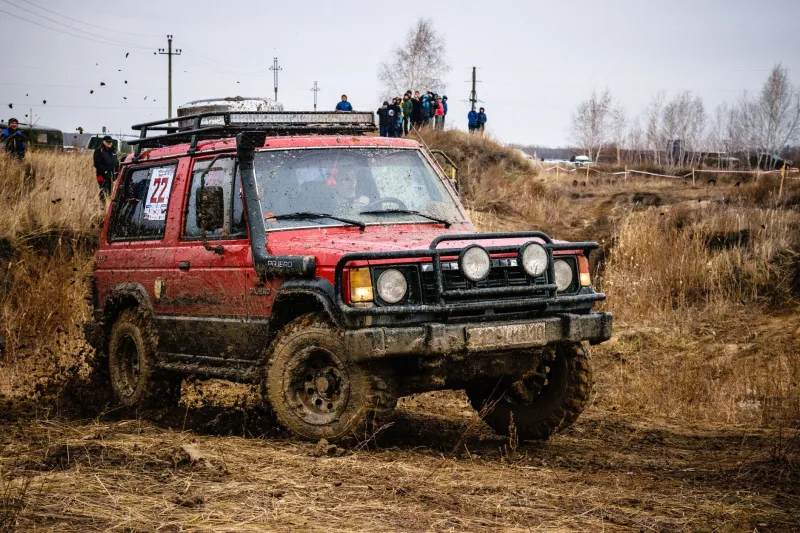
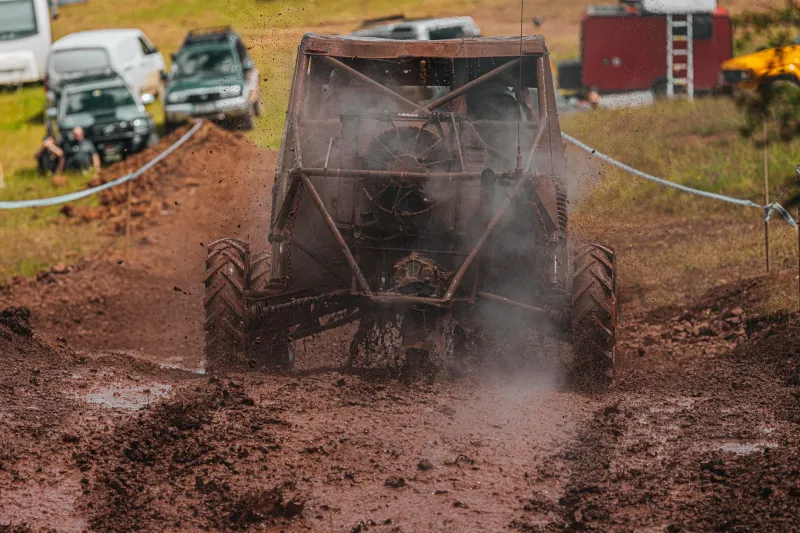
Photo: 4x4 vehicle turning around on narrow muddy British country lane, via comicfanclub.com
There's a certain kind of driver who treats every lane like a challenge to be beaten. You'll meet them at the top of a boggy climb near Bacup with a snapped halfshaft and a look of wounded pride. The rest of us learn, usually the hard way, that the smartest thing you can do on a Rossendale track is sometimes to stop, breathe, and turn the thing around.
Backing out of a lane is not a defeat. It's a judgement call, and like any judgement call it gets better with practice. Whether it's a fallen tree above Waterfoot, a gate that's churned to soup, a horsebox coming the other way, or simply a route that's more than your tyres and your自信心 can handle that day, the ability to retreat cleanly keeps lanes open, keeps your motor straight, and keeps the group talking to each other on the way home.
Decide Early, Decide Once
The single biggest cause of turning-round carnage is dithering. You creep forward "just to have a look", the front end drops into a rut, and now you're committed to a manoeuvre in a space that's got tighter with every metre. My rule is simple: if the nagging doubt arrives, stop the vehicle and get out. Stand on the bank. Look at what's actually ahead rather than what you hoped was ahead.
If the answer is no, it's no. Turn around while you've still got a wide-ish bit of track behind you, not after you've pushed another two hundred yards into a corridor of hawthorn and deep water. Early decisions are cheap. Late ones cost wings, sills and goodwill.
Read the Ground Before You Read the Mirror
Before any steering wheel goes on lock, walk the ground you intend to use. On these valley lanes, the bit that looks like solid verge is very often a two-inch crust over a drainage channel, and the bit that looks like a ditch is sometimes the firmest ground on the whole track.
Things worth checking:
- The verge on both sides — prod it with a boot. Soft, spongy or squelchy means you'll sink, spin and dig.
- Gateways and field entrances — the classic turnaround spot, but only if the gate's shut, the ground's hard and you're not blocking a right of way or a farmer's access.
- Passing places — most of our lanes have one or two. Know where the nearest one behind you is, because that's your target.
- Overhead — low branches will happily remove a roof bar or a light pod while you're watching your rear tyres.
- Drainage gullies running across the track — nice and grippy until your offside drops into one mid-swing.
If the only usable space involves tearing up the verge, that's not usable space. Tread lightly isn't a slogan, it's the thing that stops the council putting a TRO on the lane you love.
The Three-Point That Isn't
A textbook three-point turn assumes a nice flat road with kerbs. A Rossendale lane gives you a camber, a rut, a wall and a hedge. So don't be precious about the count. Three, five, seven — the number doesn't matter, the composure does.
What does matter is this: don't fight the steering on full lock with the diff wound up. On a grippy surface with a locked centre diff, winding the wheel to the stop and booting it will make the transmission complain in ways you'll hear for weeks. Keep it gentle, use low range if you've got it, and let the vehicle move before you ask it to turn.
Five-Point, Done Properly
Here's the routine that's served me well on tight tracks around Helmshore and out towards Grane:
- Stop square. Get the vehicle straight before you start, not at an angle you inherited from the last corner.
- Full lock one way, creep forward until you're a foot from the obstacle or the verge edge. Not touching. A foot.
- Full lock the other way, reverse until you're a foot from the other side.
- Repeat, but shorter each time. The gap should be growing, not shrinking.
- Finish straight — nose pointing back the way you came, wheels centred, ready to drive out rather than shuffle out.
If the gap is shrinking with each shuffle, you're doing it wrong. Stop, get out, look again. Something in your geometry is off, usually because you're not using the full width available or you're being too timid with the reverse.
Spotters and Signals
On a narrow track, a second pair of eyes is worth more than any gadget. A spotter stands where the driver can see them, not where the view is nicest, and uses clear hand signals: palms closing for "come on", fists for "stop", and a flat hand patting downwards for "slow, you're close".
Agree the signals before you start. Shouting "left a bit" from behind a hedge is how bumpers meet gateposts. And if you're the spotter — actually watch. Phone in pocket, eyes on the corners.
When Reverse Is the Only Gear
Sometimes there's genuinely no room to swing, and the only option is to reverse out to the last passing place. That's fine. It's also where a lot of damage happens, because reversing on a rutted track with a camber is a different skill entirely.
Use your mirrors and your spotter, keep the speed walking-pace, and steer with small inputs. If the track drops away or climbs behind you, remember that reverse is a lower gear than first — your engine braking is stronger, but so is your temptation to ride the clutch. In low range, let the vehicle do the work.
Manners on the Way Back
Turning round doesn't end the job. Drive out the way you came as though you're a guest, because you are. Give way to walkers, horse riders and anyone coming the other way. Close gates. Don't blast past the spot where you turned and leave a rooster tail of peat as a souvenir.
And when you get back to the car park, be honest about why you turned round. "The bottom section was holding water and I didn't fancy the exit" is a much better story than a bent wing and a recovery call. The people who last in this hobby aren't the ones who never back down — they're the ones who know exactly when to.