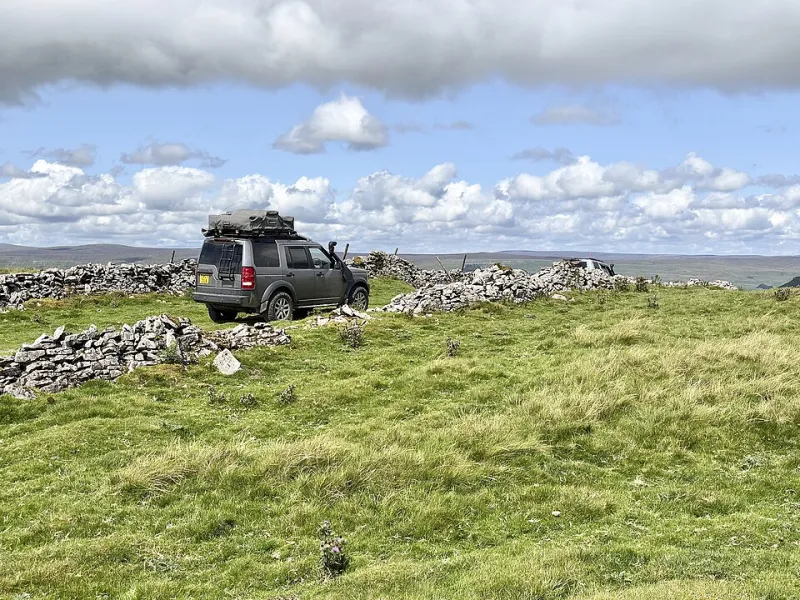
The Pull and the Pact: Recovery Manners for Rossendale's Wet Months
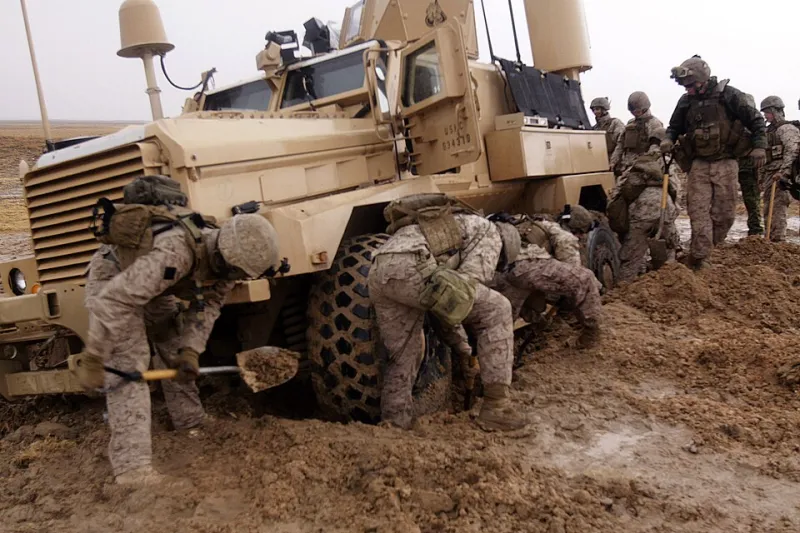
Photo: Regimental Combat Team-7, 1st Marine Division Public Affairs, Photo by Sgt. Brian Tuthill, Public domain, via Wikimedia Commons
There's a noise that carries across a Rossendale hollow in January. Not the wind coming off the tops, not the water barrelling down the gutter — it's the sound of an all-terrain tyre spinning on wet peat while the driver behind starts reaching for a strap with the enthusiasm of a man who's been waiting all week to use it.
We've all been on one end of that or the other. Recovery is the most sociable thing that happens on a green lane, and it's also the one with the most creative ways to go wrong. A tow is a two-tonne handshake: it only works if both parties know what they've agreed to.
Before anyone reaches for a rope
First question, always: does this vehicle actually need pulling? Half the winter recoveries in the valley are really traction problems wearing a disguise. Drop the tyre pressures another few PSI, clear the mud out of the treads, reverse ten feet and take a different line, or lay a couple of traction boards under the spinning wheel. Nine times out of ten the vehicle walks out and nobody has to uncoil anything.
That matters beyond pride. Every snatch deepens a rut, and ruts are what turn a lane into a rally stage and then into a closure notice. If a gentle shove and a better line will do the job, that's the recovery. Keep the heavy kit for the day it's genuinely needed.
Rated points, or no pull at all
This is the one that shouldn't be negotiable, and yet every winter somebody hooks a strap around a tow ball. A tow ball is rated for towing a trailer on tarmac at a steady speed. It is not rated for a shock load, and when one lets go it becomes a steel projectile with a strap attached.
What you want is a purpose-made recovery point bolted to the chassis — a rated eye, a JATE ring, a proper bumper-mounted shackle mount with a plate behind it. If the vehicle has nothing rated at the front, it gets pulled from something rated at the rear, or it doesn't get pulled. Same for the towing vehicle. Straps go around chassis legs and cross members, never around axles on anything modern, never over a sharp edge without a sleeve, and never in a single loop that can slide and cut.
If a driver insists their setup is fine and their setup is a ball hitch and a length of chain, you're allowed to be the unreasonable one and walk away.
Kinetic rope is not a tow strap
Two different tools, two different jobs, and confusing them is how people get hurt.
A tow strap is static. It's for a steady, controlled pull — easing a vehicle out of a rut, dragging it a short distance on firm ground. You take up the slack gently and keep tension on.
A kinetic rope is designed to stretch and store energy, then give it back. That's what makes it brilliant in mud and peat, and it's also why it demands respect. It should be rated comfortably above the vehicle's weight, used with rated shackles or soft shackles, and it should never be used to snatch a vehicle that's still firmly wedged — that's a winching job, or a dig.
Whichever you use, drape something over the middle of it. A heavy blanket, a jacket, a proper damper. If it fails, that weight drops the recoil into the ground rather than through a windscreen. And everyone stands well clear — behind the vehicles, not beside the rope, not between them, not filming from the danger zone.
Sort the plan before anything goes tight
Thirty seconds of talking saves a lot of shouting later. Agree who's driving what, who's spotting, and what the pull is meant to achieve: a nudge onto firmer ground, or a full extraction back to the gate?
Conventions worth sticking to:
- The recovered driver stays in the vehicle, engine running, wheels straight until told otherwise, ready to add a little throttle when asked. Not flooring it — assisting.
- One voice. A single spotter gives the instructions. Two people waving different directions is how you end up with a bent wing.
- Slow to start. Take the slack up first, check everything's seated, then commit.
- One pull, then reassess. Don't keep snatching at a stuck vehicle because it's nearly out. Stop, look, replan.
Signals that survive a wet windscreen
Radios are great until the battery goes, so everyone should know a handful of hand signals. A raised fist means stop, immediately. A flat palm pushed downward means slow down or take it steady. A pointed finger gives direction. Both arms crossed and waving kills the whole thing — abort, back off, we're done.
The driver being pulled can't hear you over a diesel and can't see your mouth move. Hands out the window, clear and exaggerated, or nothing at all.
Taking a hand without losing face
If someone offers, say yes. There's a strange reluctance among British drivers to accept help, as though a tow is a admission of defeat rather than a Tuesday. It isn't. Look at what they're proposing to attach to, ask what rope they're using, and if any of it looks wrong, say so. A decent recovery is a conversation, not a favour you're too embarrassed to question.
And once you're out, check your own vehicle before you drive off. Bumpers flex, brackets crack, wiring gets snagged. A two-minute look at the pub car park in Rawtenstall beats finding out on the M66.
Declining a pull, kindly
Sometimes the right answer is no. Maybe their kit isn't rated, maybe the ground will swallow both vehicles, maybe you'd rather winch from an anchor twenty metres back, or wait for the lane to dry out and come back with a mate.
Say it plainly and without judgement: "Appreciate it, but I'd rather not snatch off that — let's try boards first." Nobody sensible takes offence. What does damage goodwill is accepting a pull you know is dodgy, then blaming the other driver when something bends.
Afterwards
The thank-you is part of the job. So is the follow-up: if a lane is badly cut up, note it, share it sensibly with people who'll use the information to avoid making it worse, and leave the gate as you found it. That's the pact. Somebody pulled you out in the wet; next winter, you're the one with the rope and the flask, standing in the rain for a stranger with a spinning wheel.
That's not sentimentality. It's just how the valley keeps working.