The Maybe Day: Calling a Rossendale Lane Run When the Sky Won't Commit
There is a particular forecast icon for Rossendale in November. It is a cloud with a bit of sun, a bit of rain and absolutely no commitment. The app says maybe. The sky says maybe. The mate who is always keen says definitely. That is exactly the moment when a lane day needs a decision tree rather than a group chat full of wishful thinking.
The aim is not to be the cautious one who cancels everything. It is to make a call you can justify, whether that is go, delay or bin it. Green lanes are not a theme park. They are working bits of countryside, often soft, often narrow and often shared with walkers, horses, farmers and people who live at the end of the track. A good day out starts with an honest read of the conditions.
Start with the rain, not the icon
Ignore the little picture of a cloud. Look at the rainfall radar and the last 24 to 48 hours. Has it been drizzling since Tuesday? Has a front dumped a month of weather on the hills in an afternoon? In the Rossendale Valley, the answer is often yes to both, just in different postcodes.
Wet ground is the real forecast. Peat and clay do not drain like a car park. They hold water, then they hold wheels. If the radar has been a solid smear of rain and the local becks are running brown and high, the lanes will be heavier than the app suggests. That is not a automatic no-go, but it is a big tick in the maybe column.
If there is a Met Office warning covering the area, treat it as a proper signal. Wind warnings on exposed tops, rain warnings on already soggy ground, snow and ice warnings on the higher roads — none of these are background noise. A lane day can survive a shower. It cannot argue with a warning.
Wind, visibility and the huddle test
Up on the tops, wind is more than a bad hair day. It opens doors, grabs map boards, makes recovery kit into a sail and turns a simple wheel change into a two-person job. If the gusts are strong enough that you are thinking about it, the answer is probably delay. There is no shame in waiting for a calmer window.
Visibility matters just as much. Low cloud sitting on the moors can turn a familiar track into a grey room with no edges. If you cannot see the next gate, the next bend or the next vehicle in the convoy, you are not lane-ing. You are guessing. The valley has plenty of days when the cloud lifts by lunchtime. Use them.
Then do the huddle test. Before anyone airs down, stand around and ask the group to explain the plan back to you. Where are we going? What is the turnaround? Who has recovery gear? What is the bail-out? If the answers are vague, the forecast is not the problem. The plan is.
The ground truth: peat, bog and tread
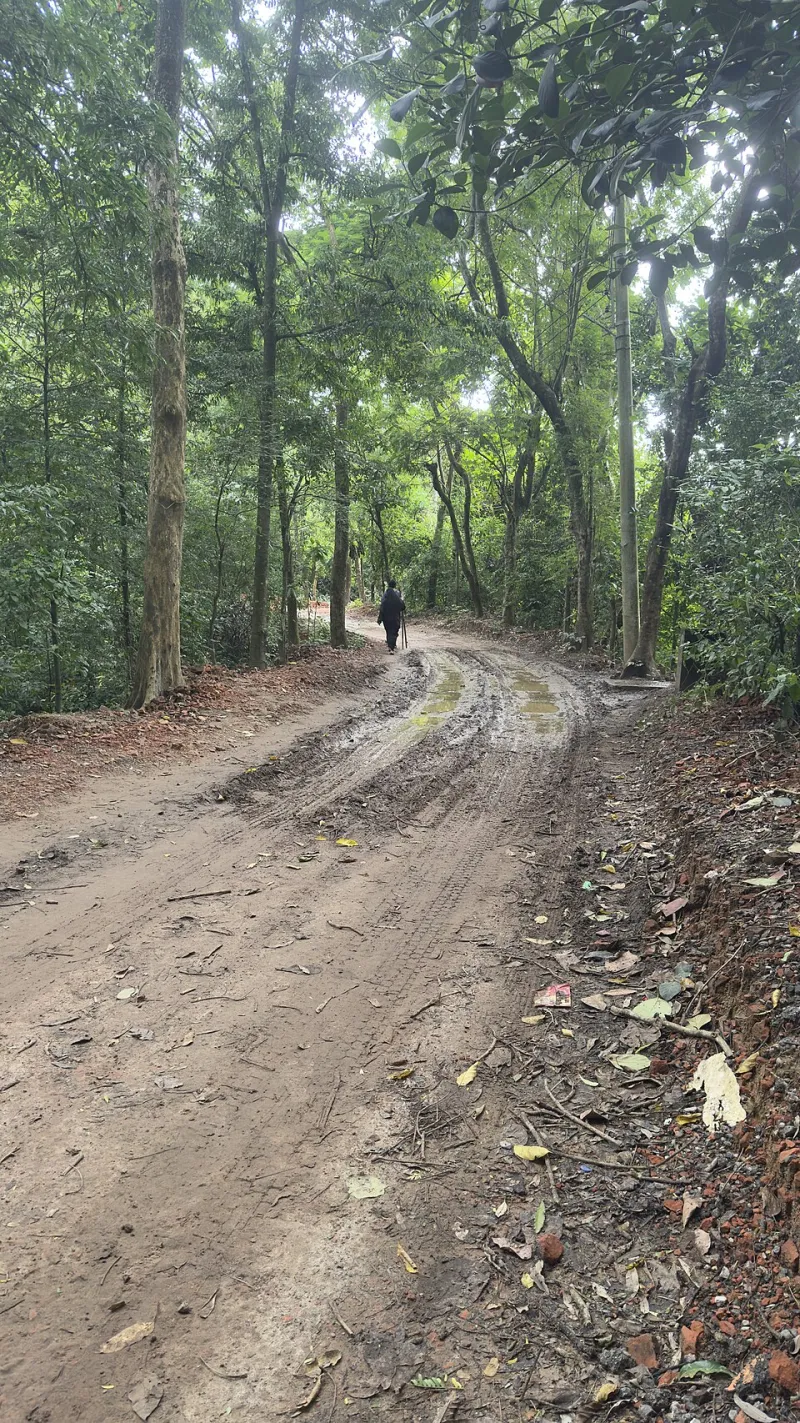
The forecast gets you to the gate. The ground tells you whether to open it. Rossendale lanes can look firm at the entrance and turn into a peat sponge fifty metres in. If your boots sink and the holes fill with water as you watch, that is the lane telling you something.
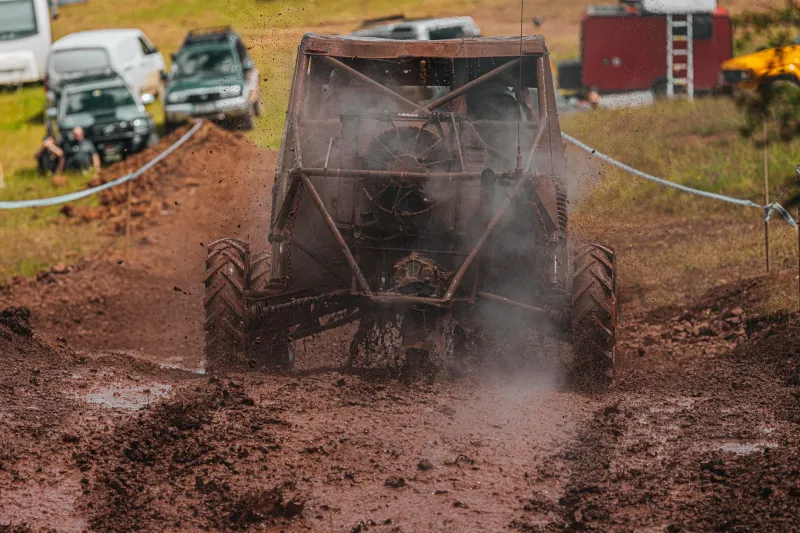
Bog risk is not just about getting stuck. It is about what getting stuck does to the surface. A gentle assisted recovery is one thing. A convoy of heavy vehicles chewing the same soft patch is another. If the lane is already wet and the group is large, the kindest call may be to save it for a drier week.
Tread matters, but it is not a magic wand. Aggressive tyres can get you further into trouble and further from a clean exit. A modest vehicle with a sensible driver and a clear plan will often do less damage and have a better day than a lifted rig on the wrong track. Match the vehicle to the lane, not the other way round.
The group equation
A lane day is a group activity, even when it feels like a solo adventure. Experience levels, vehicle prep and recovery confidence all change the go/no-go call. A route that is fine for three well-equipped regulars can be a poor choice for a mixed group with a first-timer in a standard daily.
Ask the boring questions. Does everyone have suitable tyres? Is there a working radio or a plan for hand signals? Has anyone checked the access and any temporary closures? Is there a second vehicle, and does everyone know how to use a tow strap safely? If the group cannot answer those without bluster, delay.
Convoy size is part of the same equation. Big groups are slower, louder and harder to turn around. On a marginal day, smaller is better. If the weather is sitting on the fence, leave the ten-vehicle run for another time and keep it to two or three sensible motors.
Bail-outs are the plan, not the failure
Before you set off, agree the exits. Not just the end point — the real exits. The farm track, the wider bit of verge, the junction where you can turn a convoy without a twenty-point shuffle. Know where the day can end early and still be a good day.
Set a time cutoff too. If you are not through the soft section by 2pm, you turn around. If the weather closes in, you turn around. If the group is tired, you turn around. The lane does not owe you a finish. Turning back early is not a defeat; it is lane protection with a steering wheel.
That matters for access as much as for pride. Every rutted mess, every widened passing place and every rescue that could have been avoided is an argument for someone to close a lane. The green-laning community spends plenty of time defending routes. The best defence is often a quiet decision to leave one alone when conditions are wrong.
The simple go/no-go checklist
Use this before you commit. One clear no is a no-go. Two or more maybes mean delay, unless conditions are visibly improving.
- Rain radar: has the area had sustained rain in the last 24 to 48 hours?
- Warnings: is there a Met Office warning for wind, rain, snow or ice?
- Visibility: can you see enough to read the route and keep the convoy together?
- Ground: are boots sinking, holes filling and peat feeling spongy?
- Group: does everyone have the kit, experience and vehicle for the worst bit?
- Bail-outs: do you know where to turn around and when to call it?
- Access: have you checked for closures, diversions or sensitive areas?
- Lane protection: would a reasonable person say this track needs a rest?
If the answer to the last one is yes, that is your no-go. The lane will still be there when it dries out.
Go, delay or bin
Go when the forecast is settled, the ground is firm enough, the group is honest about its limits and the bail-outs are clear. Delay when the day is marginal but improving — use the time for a recce, a kit check or a brew. Bin it when the warnings are up, the ground is saturated, the group is not ready or the lane is taking a beating.
A no-go is not a wasted weekend. It is a decision made in a car park rather than halfway up a bog. The best Rossendale lane days are not the ones where you ignored the forecast. They are the ones where you read it properly, made the call and came home with the truck, the lanes and the friendships intact.