When the Bars Drop Out: Building a Convoy Comms Routine for Rossendale's Hollows
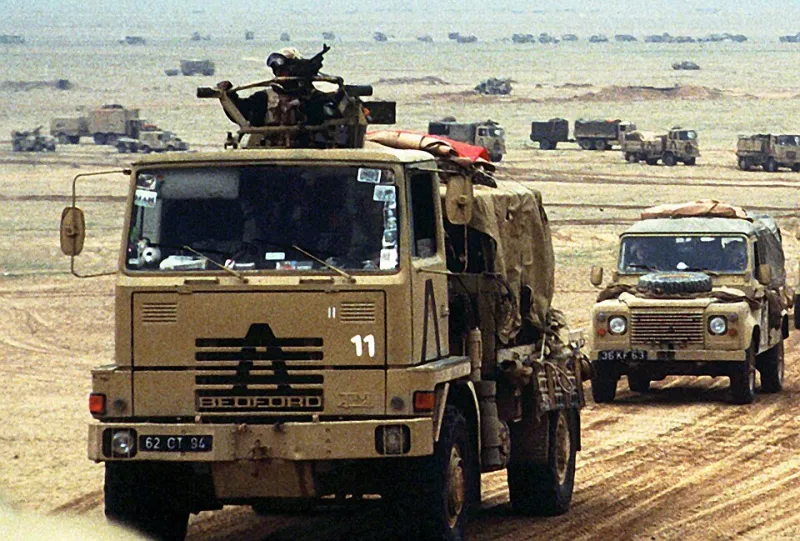
Photo: British_Army_convoy_during_the_Gulf_War.JPEG: PHC HOLMES derivative work: Charles01 (talk), Public domain, via Wikimedia Commons
Picture it: three trucks strung out along a walled lane above Cloughfold, the middle one stops to check a gate, and by the time the lead vehicle reaches the top the last one has vanished behind a bank of trees. Everyone has a phone. Nobody has a signal. Twenty minutes later you are all parked in different places wondering who is where.
This is not a rare story in the Rossendale Valley. The lanes here do not just go up and down, they fold in on themselves. Deep cloughs, high-sided tracks, dense woodland and steep valley walls all do a fine job of swallowing radio waves. A comms plan is not about buying the most expensive kit. It is about agreeing, in advance, how the group behaves when the tech stops working.
Why the Valley Eats Your Signal
Anyone who has driven the lanes around Sharneyford, Deerplay, Musbury or the back of Waterfoot knows the pattern. You get a bar on the phone, you lose it, you get a text through, then nothing for a mile. Terrain is only half of it. Trees, farm buildings and the sheer depth of some of the cloughs all add to the problem.
So build your plan around the assumption that the signal will fail, not that it might. That single shift in thinking changes what you carry, what you say in the car park, and how far apart you let the convoy spread.
CB, PMR and the Honest Answer
There are two sensible options for UK green-laning groups, and most well-prepared convoys end up using both.
CB radio on the 27MHz bands, running UK FM or CEPT depending on your set, gives you the best real-world range of the cheap options. A properly installed vehicle set with an external antenna will typically hold a conversation across a couple of miles in open country, and rather less when you are buried in trees. The key word is properly installed: a mag-mount dumped on the dashboard is not an antenna system, it is a decorative ornament. Get the mount on the roof, get the cable routed sensibly, and set the squelch so you are not listening to the washing machine next door.
PMR446 handhelds are the other half of the equation. They are cheap, licence-free, pocket-sized and brilliant for close-in work: spotting someone through a tricky section, talking a nervous driver down a step, or keeping the recovery team in touch while the winch is running. Their range is modest, especially in the valley, so treat them as a short-range tool rather than a convoy-wide solution.
A sensible split is CB in the lead and sweep vehicles for the long conversation, with everyone carrying a PMR handheld for close work. Spare batteries or a charging cable for both. And a quick radio check before you set off, because finding out your set is dead at the bottom of a lane is a rubbish way to start the day.
The Phone Is Not Useless, It Is Just Not a Radio
None of this means leaving the phone at home. It means using it for what it is genuinely good at.
Download offline maps before you leave the house. Ordnance Survey mapping, Outdooractive, or whichever app you trust, with the tiles for the whole route already saved. Screenshot the lane junctions. Pin the car park where you are meeting. Save a what3words reference for the awkward gate halfway round, so that if someone does get a signal they can send three words instead of a rambling description of a wall and a tree.
Battery is the other thing. Cold mornings in the valley flatten phones quickly, so keep a power bank in the glovebox and the phone in an inside pocket rather than on the dash. Airplane mode in the dead spots saves a surprising amount of charge. A paper route card, folded in the door pocket, still works when everything else has given up.
Check-In Points: The Bit Everyone Skips
This is where most convoys come unstuck, and it has nothing to do with hardware. It is about agreed behaviour.
Before the first gate, the group should know the route, the order of vehicles, who is leading, who is sweeping, and which radio channel is the main one. Then agree the check-in points: the junction at the end of the first lane, the top of the long climb, the gate where the route turns back on itself. At each one, the lead vehicle waits until the sweep arrives, or until a radio call confirms the whole group is through.
Set a simple rule for the gaps. If the convoy strings out, the lead slows at the next safe widening and the sweep keeps the pace steady. Nobody gets pressured into driving faster than they are comfortable with to catch up. If a vehicle stops, the one behind stops too, and calls it in. If the radios go quiet for more than a couple of minutes, the sweep says so.
The last vehicle is never left behind. That is the whole job.
What Goes in the Briefing
Keep it short, keep it specific, and do it in the car park while the flask is still out.
- Route and any planned alternatives, including where you can bail out if the weather turns.
- Who is carrying recovery gear, first aid and a tow rope, and who knows how to use them.
- Any medical info the group needs to know, volunteered by the person concerned.
- Gates, livestock, walkers and dogs. Close what you open, give horses plenty of room, and do not park in passing places.
- A message left with someone not on the trip: route, registration numbers, expected return time.
On the emergency side, know the difference between a delay and an incident. A stuck truck with everyone safe is a recovery problem, not a 999 call. If someone is injured, that changes immediately. Mountain rescue and the emergency services cover this area well, but they need a location, which is another good reason to have a what3words reference and a printed route to hand.
When It Goes Quiet
The plan should include a simple lost-contact protocol. Stop in a safe place. Count the vehicles you can see. One person stays with the truck. Do not wander off down the lane looking for the others, because that is how a small gap becomes a search. Use hazards, use the horn, use the radio on the hour and on the half hour, and fall back to the last agreed meeting point rather than guessing.
None of this is glamorous. It is just the difference between a slight delay and a long, cold afternoon. A convoy that talks to each other properly is a convoy that looks after the lanes, the locals and each other, and that is worth a bit of fuss in the car park.