Before the Bog Claims You: A Weekend Spanner Plan for Pennine Winter Lanes
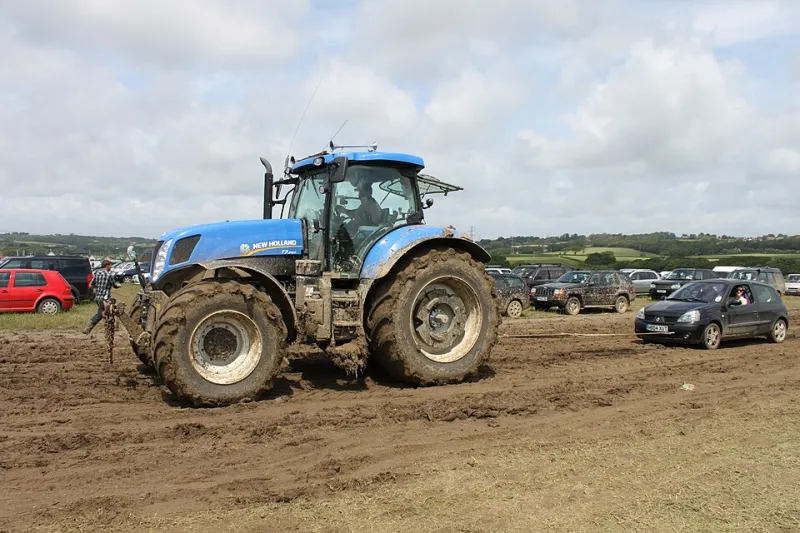
Photo: Stephen West, CC BY 2.0, via Wikimedia Commons
There is a particular sound that greets you on a Rossendale lane in late November. Not birdsong, not a tractor — the wet slap of a tyre hunting for a rut, followed by a scrape underneath that you would rather not investigate. Winter lands early up here. The Grane Road takes its first proper soaking, the moor tops above Deerplay turn to brown soup, and the puddle that was ankle-deep in September now has a bottom you genuinely cannot see.
So before the bog claims you, give up a Saturday. A brew, a trolley jack, a wire brush and this list will do more for your winter than any sticker or light bar. None of it is glamorous. All of it gets you home.
Start with the rubber, not the receipts
Tyres are the whole ball game on wet Pennine clay, and it is amazing how many people will spend four figures on suspension and then run around on budget road rubber.
- Check tread depth properly, across the centre and both shoulders. Three millimetres is where an all-terrain starts losing its grip on grass and slick mud.
- Look for perishing and sidewall cuts. Cold weather finishes off tired rubber quickly.
- Check your spare. Actually check it — pressure, tread, and whether the wheel brace still fits the nuts.
- If you are running all-terrains, drop pressures on the lane (somewhere around 24–28 psi works for most mid-size 4x4s) and pump back up before you hit the A56. Loose surfaces want a bigger footprint; tarmac wants the opposite.
- Mud tyres are brilliant in the slop and a chore everywhere else. Be honest about how much of your driving is actually muddy.
Recovery points: rated, never improvised
A tow ball is not a recovery point. Neither is a bit of box section welded on by a mate in a hurry. If you are going to need pulling out — and in a wet Rossendale winter you probably are — do it properly.
Rated front and rear recovery points, a couple of decent bow shackles, a proper recovery strap rather than a tow rope with hooks on the end, and a bridle so a single recovery point is not taking the whole load. Check the plating is legible and the bolts are torqued. Then practise using it once, in a dry field, before you are doing it in the dark with water coming over the sills.
Underneath: armour and breathers
Have a good look at what hangs lowest. Diff centres, the steering linkage, the sump, the transmission — all of it is expensive and none of it is designed to meet a rock stepped out of the hillside.
Diff guards and a steering guard are the cheap end of insurance. Sill protection matters if you are squeezing between drystone walls. While you are under there, trace the breather pipes for the gearbox, transfer box and diffs: extending them up into the engine bay costs very little and saves a gearbox full of brown water. Grease the propshaft nipples, check the UJs for play, and look at the condition of the fuel and brake lines while your head is in the right place.
Electrics and the green fuzz
Water and 12-volt systems are not natural allies. Work through the lights, the earths and the exposed connectors with a bit of dielectric grease. Check the battery holds a load — a tired battery that survived summer will let you down the first cold morning you actually need it — and put a jump pack in the boot rather than relying on the kindness of strangers on Holcombe Moor.
If your vehicle goes wading, know where the air intake is before you commit, and never assume the water is as shallow as the last person's tracks suggest. Walk it if you are unsure. Ego is cheaper to repair than a hydrolocked engine.
Corrosion: the slow killer
Grit and salt from the main roads do not evaporate, they sit in the chassis rails and the inner wings and quietly get on with it. Give the underside a proper hose down after a run, then let it dry before you do anything else. Check the common rot spots — outriggers, sills, body mounts, the bottom of the bulkhead, brake pipes running along the axle — and deal with the MoT advisories now rather than in February when the tester is standing there with a screwdriver.
If you are planning to keep the thing, a lanolin-based or wax treatment in dry autumn weather is money well spent. Do it once, properly, and stop chasing rust for a few years.
Lights and being seen
Long lanes, short days, and a lot of farmers' gates to find in the dark. Check every bulb, the beam pattern, and that your rear lights are not full of water. If you run a light bar, remember it is an off-road item: cover it on the road and keep it off for other traffic. A decent head torch lives in the glovebox permanently, not the garage drawer.
The boot kit
- Recovery strap, shackles, gloves
- A decent shovel — a proper one, not a folding toy
- Jump pack, tow rope, tyre inflator and gauge
- Warm layer, spare socks, waterproofs, a flask
- First aid kit and any medication
- Water and a bit of food
- Paper map or offline mapping, because signal around the valley bottom is patchy at best
Etiquette: the bit nobody posts about
Winter is when lanes get damaged and access gets lost. Check for temporary closures, traffic regulation orders and width restrictions before you set off, use Trailwise or the local TRF knowledge, and stay on the marked route. Don't widen anything, don't churn a gateway into a bog for the sake of a photo, and don't run a big group down a quiet lane on a Sunday morning.
Close gates. Park where you are not blocking a farm track. Say hello to the farmer, the walker and the horse rider. Most of the goodwill that keeps green lanes open is built in those ten seconds.
The weekend order of work
Saturday morning: tyres, pressures, brakes, fluids, battery, lights. Saturday afternoon: underside inspection, guards, breathers, greasing, corrosion notes. Sunday: recovery kit, boot kit, mapping and route planning, then a short local shakedown run to make sure it all still works.
Do that and the first properly filthy morning of the winter becomes a laugh rather than a lesson. See you out there.